When should I reward my pet with treats? The answer depends on timing, behavior, health, and your pet’s individual needs. A treat should not become a random snack. It works best as clear feedback for something you want repeated, such as sitting calmly, coming when called, or tolerating gentle brushing.
Veterinary behaviorist Dr. Sophia Yin emphasized that rewarding desired behavior helps make that behavior more likely to return. Her approach reflects a practical truth: pets learn through immediate consequences. If your dog lies quietly while guests enter, offer a small treat within seconds. If your cat uses the scratching post, reward that choice before she wanders away. Timing matters.
Small rewards work well.
However, treat training is not perfectly simple. I have sometimes focused so much on rewarding obedience that I overlooked stress signals, tiredness, or hunger. That is a mistake worth examining. A pet may appear cooperative while feeling overwhelmed. Watch the loose body, soft eyes, relaxed ears, and willingness to engage. Stop when your pet loses interest.
This guide explores when should i reward my pet with treats while considering calories, training goals, age, medical conditions, and emotional comfort. Treats should complement balanced meals, not quietly replace them. A pea-sized reward may be enough. Fresh water, play, praise, and access to a favorite resting place can also reinforce good behavior. When uncertainty remains, consult a qualified veterinarian or certified behavior professional for advice suited to your pet.
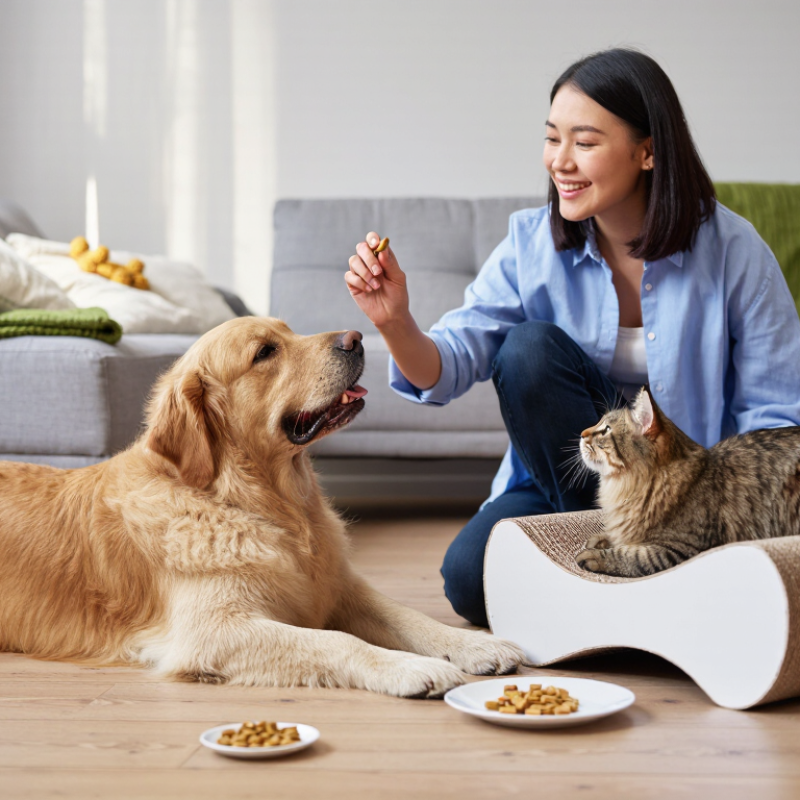
Treats can make training clearer, kinder, and more rewarding. A small piece, delivered immediately, marks the behavior you want. This helps during leash practice, recall, grooming, or calm waiting. The American Veterinary Society of Animal Behavior supports reward-based training in its 2021 position statement. Rewards can encourage learning without fear-based handling. Food is not the only option. Praise, play, sniffing, or access to a favorite place may work better for some pets.
Timing and calories matter. The WSAVA Global Nutrition Guidelines advise keeping treats and other extras below 10% of daily energy intake. The remaining calories should come from a complete, balanced diet.
The Association for Pet Obesity Prevention reported that 59% of surveyed dogs and 61% of surveyed cats were overweight or obese in 2022. That figure makes casual generosity worth reconsidering. A treat should fit the animal, not merely the owner’s hand. Smaller pieces help. Very small.
Offer the reward after the desired action, not before every demand. For a puppy, one pea-sized piece may be enough. For a cat, measured food can prevent extra calories.
Record treats for several days; memory is unreliable. Ask a veterinarian to adjust portions for allergies, kidney disease, diabetes, or weight loss.
I still find the 10% rule imperfect. Calorie needs vary widely, and labels can confuse. Use it as a guardrail, then observe waist shape, stool, energy, and training progress.
Give it within seconds of the desired behavior. Reward calm sitting, gentle handling, recall, or quiet waiting. Timing matters.
Use a pea-sized piece for many pets. Smaller pieces reduce calories during repeated practice. Very small pieces work.
Treats should usually stay below 10% of daily calories. The complete main diet should provide the remaining nutrition. Measure the allowance first.
Check the calorie content, ingredients, feeding directions, and suitable species. Consider your pet’s age, size, allergies, and medical needs. “Natural” does not always mean safe.
Avoid chocolate, grapes, raisins, onions, garlic, and products containing xylitol. These foods can cause serious health problems. Keep them out of reach.
Yes. Praise, play, gentle touch, sniffing time, or a favorite toy may work well. Some pets value attention more than food.
Yes. Reward one quiet second before expecting longer calm behavior. Increase difficulty slowly. Progress can look tiny.
Do not reward jumping, barking, or scratching after the behavior returns. I sometimes reward too late. Watching body language helps correct that mistake.
Ask before giving treats to pets with allergies, kidney disease, diabetes, or weight concerns. Seek help after vomiting, diarrhea, choking, or unusual fear. Pause training if your pet freezes or hides.
Knowing when should i reward my pet with treats is essential for effective training and long-term well-being. Treats can reinforce desired behaviors, build trust, encourage learning, and make progress more enjoyable. Offer a small reward immediately after behaviors such as responding to a cue, remaining calm, using the correct toilet area, or showing gentle social behavior. Choose treats that are safe, age-appropriate, and suitable for your pet’s size, health needs, and dietary sensitivities. Simple ingredients, appropriate texture, and easy-to-break pieces can make rewards more practical.
Treats should support a balanced diet rather than replace regular meals. Keep portions small, count treats as part of the daily calorie intake, and reduce meal portions when necessary. Fresh water should always be available. Avoid rewarding begging, fear-based reactions, or unwanted behavior, and never use excessive treats to compensate for insufficient exercise, attention, or training. By rewarding selectively, consistently, and responsibly, pet owners can encourage positive habits while helping their companions maintain a healthy weight and lifestyle.

 Curipaw Pet